Why functional programming?
A reasonable question to open with: if you can already write programs in C or Python or Java, why spend twelve weeks learning a new style? You are not, after all, going to ship code in OCaml at every job you ever have. The answer is the same answer that justifies learning any new language: it changes how you think about programming, and the new habits transfer back to whatever language you write in tomorrow. This lecture makes that case concrete.
We will get there in three steps. First, an observation about programming languages in general: Turing-completeness is a low bar, and the interesting question is not what a language can compute but how easily you can express what you want. Second, the functional-programming thesis: programs built around pure functions and immutable data are easier to reason about, easier to test, easier to parallelise, and easier to refactor than programs built around mutable state. Third, an honest accounting of where this breaks down: functional programming is not a free lunch, and OCaml is functional-first rather than functional-only specifically so you can step outside the discipline when you need to.
A one-instruction programming language
Here is a thought experiment that will sharpen what we mean by "what
a language is for". Imagine a programming language with a single
instruction. It is called subleq, which stands for subtract and
branch if less than or equal to zero. The instruction takes three
arguments:
subleq A, B, C
The semantics is one line: store at memory location B the
difference mem[B] - mem[A], and if the result is ≤ 0, jump to
instruction C. That is the entire language. There are no other
instructions. No add, no load, no if, no while. There is
not even a separate goto. The subleq instruction itself does
the conditional jump.
A convention worth knowing before the next snippet: if the third
operand is the address of the very next instruction (the common
case, no branch taken), most subleq assemblers let you drop it.
A two-operand subleq A, B is shorthand for "subtract and fall
through to the next instruction." We use that shorthand below; the
semantics are unchanged.
Three subleq instructions, working with one scratch memory
location Z that starts at zero, implement addition. The pattern
is:
; initially Z = 0
subleq A, Z        ; Z := Z - A     (so Z = -A)
subleq Z, B        ; B := B - Z = B + A
subleq Z, Z        ; Z := 0 again
You can work out for yourself, with patience, that after these three
instructions, the memory at location B contains B + A and the
memory at Z is back to zero.
With slightly more work you can write the subleq equivalents of
"copy a memory cell", "branch on a condition", "multiply by a
constant", and so on. After enough such gadgets, you have all the
building blocks of a Turing machine. subleq is Turing complete:
it can compute anything any other programming language can
compute.
To make "with slightly more work" concrete, here is a complete
subleq program that computes S := 1 + 2 + ... + N: the sum
of the first N positive integers. It assumes the memory cell
N starts at the value we want (say, 5), S and Z start at
0, and ONE is a cell whose value is permanently 1.
; S := 1 + 2 + ... + N.
; Initially: N holds the count, S = 0, Z = 0, ONE = 1.

LOOP: subleq N, Z              ; Z := -N
      subleq Z, S              ; S := S + N
      subleq Z, Z              ; Z := 0
      subleq ONE, N, DONE      ; N := N - 1; if N <= 0, jump to DONE
      subleq Z, Z, LOOP        ; unconditional jump back to LOOP
DONE:
Six instructions. Three idioms are doing the work, and every one
of them is the subleq equivalent of something a higher-level
language gives you in a single keyword:
- The first three instructions are the addition gadget from
above, used to compute
S := S + N. - The fourth instruction is a conditional branch combined with
a decrement:
subleq ONE, N, DONEsubtracts 1 fromNand, if the result is<= 0, jumps toDONE. The decrement and the exit test are the same instruction. - The fifth instruction is the canonical
subleqidiom for an unconditional jump:subleq Z, Z, LOOP. ComputingZ - Zalways gives0, which is<= 0, so the branch is always taken. That is how you writegotoin a language that only has subtract-and-branch.
Trace it for N = 3: iteration one sets S = 3, decrements N
to 2, jumps back. Iteration two sets S = 5, decrements N to
1, jumps back. Iteration three sets S = 6, decrements N to
0, and the conditional branch fires: DONE. We are left with
S = 1 + 2 + 3 = 6. The program is in any meaningful sense a
for loop, but you cannot see the loop in the code; you have
to recognise the unconditional-jump idiom, recognise the
decrement-and-branch idiom, and reconstruct the control flow in
your head. The code does not say "loop"; the code says "subtract
this from that and branch."
That is the practical content of "Turing complete": yes, you can
write any program; no, you do not want to. And a substantial
subleq program (one that allocates an array, calls a function,
or even just compares two values without leaving them in a
wrecked state) is a great deal more painful than the six lines
above. Writing one is a humbling experience and an appetite-builder
for the idea of abstraction, which is what the rest of this
course is about.
So why not write all our programs in subleq? The flippant answer
is "because we would never finish anything." The more careful answer
is the one that motivates this entire course: a programming language
is not primarily a way of telling a CPU what to do. A programming
language is a way of thinking about a problem. When you write a
program, you are doing two things at once: communicating an
algorithm to a machine, and communicating that algorithm to a human
reader (often your future self, or, in 2026, an LLM-based coding
agent helping you maintain the program). The first is a solved
problem; once you have a Turing-complete language, you can compute
anything. The second is the hard part. Coding agents, incidentally,
are also much better at higher-level languages than at subleq;
the same readability that helps a human reader helps the agent
predict what comes next.
subleq fails badly at the second task. A subleq program that
implements anything non-trivial looks like a long sequence of memory
manipulations with no high-level structure visible: you cannot see
what the program is for by reading it. You have to simulate it
in your head, instruction by instruction, to figure out what it
does. That is fine for a CPU; it is murder for a human reader.
Alan Perlis (1922-1990)
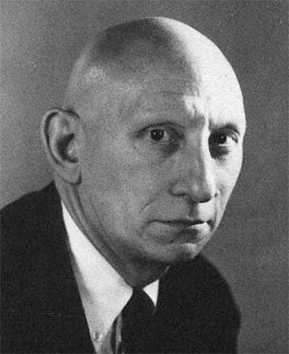
"A language that doesn't affect the way you think about programming is not worth knowing."
Alan Perlis, Epigrams on Programming (1982).
Pioneer in compiler construction and programming-language design; the first ACM Turing Award winner (1966), cited for "influence in the area of advanced programming techniques and compiler construction."
The whole point of higher-level languages is to push what you say closer to what you mean, so that reading code is closer to reading your problem statement than it is to simulating a CPU. C raises the level above assembly: variables instead of memory addresses, expressions instead of single instructions, loops instead of explicit branches. Java raises it above C: classes group related data and behaviour, exceptions structure error handling, garbage collection removes a class of bugs. Python raises it above Java: list comprehensions, dynamic types, less ceremony.
Functional programming, the subject of this course, raises the level in a different direction. Instead of adding ever-more-elaborate structures around the assignments and loops of imperative programming, it asks a more radical question: what if we got rid of assignment and loops in the first place? What if every value was immutable, every function was a pure mathematical mapping from input to output, and the only way to "change" a data structure was to build a new one? It sounds restrictive (and we will see where it genuinely is) but it turns out to free up a lot of mental energy that imperative programs eat without you noticing.
The functional thesis
There are two ideas at the centre of functional programming. They are simple to state and have far-reaching consequences. The rest of this course is largely about working out those consequences in detail.
Functions are values. In OCaml, a function is a value of a
particular type, exactly the same way an integer is a value of type
int. You can pass functions to other functions. You can return
functions from other functions. You can store them in lists. You
can bind them to names with let. There is no separate "function"
construct that exists outside the value language; functions are
ordinary values that happen to be callable.
You may have seen lambdas in C++ (added in C++11), arrow functions
in JavaScript, or lambda expressions in Java (added in 8). All of
these are descended from the way functional languages have always
treated functions. The difference is that in OCaml, this is the
default, not an opt-in. You do not write class Greeter { String greet(String who) { ... } } and then maybe pass a method reference
around; you write let greet who = ... and pass greet around.
The amount of ceremony required to express "I want to apply this
operation to each element of a list" is dramatically lower in OCaml
than in Java or C++.
Data is immutable. When you bind a name to a value in OCaml,
that binding does not change. The value xs = [1; 2; 3] does not
get modified; if you want a longer list, you build a new one
that starts with a new element and continues with the old list.
The old list is still there, untouched, and any code that was
holding it sees the same thing it always saw.
This is the change of perspective that takes the most adjusting to
if you arrive from C or Python. Mutation feels natural in those
languages: i++ increments i, arr[3] = 7 modifies the array,
obj.field = value updates the field. In functional programming,
you do not do any of that. There is no ++. There is no arr[3] = 7. There is no obj.field = value. Instead, you write functions
that return new values with the desired change: i + 1, replace arr 3 7, { obj with field = value }. The old i, arr, and
obj are unchanged; you have new ones.
Together, these two ideas reframe programming. A program is no longer a recipe of steps that change a state. A program is an expression built out of smaller expressions, each producing a value. Running the program means evaluating the top-level expression to a value. The state of the world enters and leaves only at the edges, where the program reads input or writes output; in between, everything is value-to-value.
Pure functions and what they buy you
A function is pure when its behaviour is fully determined by its arguments. Two specific things have to be true: the function's output depends only on its inputs (the same arguments always produce the same output), and the function produces no observable side effects (no I/O, no mutation, no exception, no reading or writing of hidden state). A pure function is, in the mathematical sense, just a function: a mapping from inputs to outputs.
The function double above is pure. double 21 is 42, and not
just on a Tuesday: always, every time, in every context. You can
write double 21 in any place a program needs the value 42. Your
program does not care which is there.
That property, that a pure function call can be replaced by its result without changing the meaning of the surrounding program, is called referential transparency. It is the most important property of pure functions, and arguably the most important property of functional programming as a discipline. We will use it constantly.
Referential transparency licenses equational reasoning: the same
kind of substitution you do in algebra. From middle-school algebra
you know that if x = 5, then any expression that contains x
gives the same answer when you replace x with 5. Pure-function
calls give you the same right: if double 21 = 42, then any
expression containing double 21 is equal to the same expression
with 42 substituted in. Run this calculation in your head:
You know double 21 = 42, so total = 42 + 42 = 84. You did not
need to run the program to know that. You did not need to
trace anything. You just substituted. This is what we mean when
we say functional code is "easier to reason about": you have
permission to do this kind of substitution.
This sounds like a small thing and it is in fact one of the largest practical advantages of FP. It is the foundation of:
- Refactoring. You can replace any pure function call with its body, or extract a chunk of expression into a new helper, without worrying about whether some intermediate state changes the answer. The compiler will catch the type-level mistakes; the referential-transparency property guarantees there are no semantic mistakes hiding in the move.
- Testing. A pure function depends only on its inputs, so a unit test that calls it with a fixed input gets a fixed output, every time, forever. There are no flaky tests, no test ordering issues, no "but it worked on my machine". The space of inputs is the space of behaviours.
- Parallelisation. Two pure function calls that do not share arguments can be run in parallel without any synchronisation, because neither can affect the other's result. No locks. No data races. No memory model. The same property that makes refactoring safe makes concurrency safe.
- Caching. If
f xis expensive to compute and pure, you can cache its result the first time and re-use the cached value forever. This is called memoisation. The fact that the function is pure means caching is always correct.
Imperative code resists equational reasoning
Compare what you can do with this C function:
The function next returns a different value every time you call
it. next() == next() is false (the first call returns one
value, the second returns the next). You cannot substitute next()
with its result, because there is no single "result"; each call
returns a different thing depending on the global state at the
moment of the call. You cannot reorder two calls to next without
changing the program's meaning. You cannot cache them. You cannot
parallelise them. Most importantly, you cannot read code that calls
next and know what it does without also knowing the history of
every previous call to next that the program has made.
This is not a contrived example. In real imperative programs, most functions are not pure. Almost every Java method modifies its receiver's fields. Almost every C function with side effects implicitly reads and writes memory the caller did not pass in. To understand what such a function does, you have to know what state it touches, which means reading the function's source, which means reading other functions it calls, recursively. This is one of the reasons large imperative codebases become hard to change: every function you call drags in a transitive cone of state, and reading any local fragment requires reasoning about a non-local set of facts.
Functional programming asks: what if we just did not let functions read and write outside of their argument list? The discipline costs you the ability to do certain things easily (we will come back to the costs). The payback is that you can read any function in isolation, and reasoning about a 100,000-line FP codebase decomposes into reasoning about 100,000 lines, one function at a time.
This is not a fringe idea. In 1977, John Backus, the man who had led the creation of Fortran (the original imperative language) used his Turing Award lecture to attack the very style he had helped invent: its title was Can Programming Be Liberated from the von Neumann Style? Backus argued that programming was shackled to the assignment statement, shuttling values one word at a time between memory and processor, and that a language built from the composition of pure functions could be reasoned about with ordinary algebra instead. Almost fifty years on, the immutable defaults and expression-based style he called for are exactly what this course teaches.
Immutability in practice
The other half of the FP thesis is immutability. Here is what it looks like in OCaml. We will use the list type, which is the workhorse data structure of every ML-family language.
The expression 0 :: xs is "cons": it builds a new list whose first
element is 0 and whose tail is xs. So ys is [0; 1; 2; 3].
But notice: xs is unchanged. If you look at xs after the
second line, it is still [1; 2; 3]. We did not modify xs; we
built a new list ys that shares its tail with xs.
This sharing is the practical reason immutability does not cost an
arm and a leg. The runtime does not copy xs when it builds ys;
it just points to the existing list. Both xs and ys live in
memory at the same time, sharing the [1; 2; 3] portion. This is
called a persistent or purely functional data
structure,
and an entire subfield of computer science is devoted to designing
them so that operations like "add an element" or "remove an
element" are cheap. The canonical reference is Chris Okasaki's
Purely Functional Data Structures (Cambridge University Press,
1998), linked in the reading list.
Immutability is what makes equational reasoning extend from individual
function calls to data structures. If xs cannot be modified
underneath you, then "the list that xs names" is a fact about your
program: it is the same fact one line down, one function call deep,
or twenty function calls deep, as long as xs is in scope. You can
pass xs to a function and know the function cannot change it.
Compare this to C, where if you pass int *p to a function, the
function can freely write *p = 7 and you have to read the function
to know whether it does. Java is worse: every reference is
implicitly mutable, and a method can rearrange the inside of a
collection you passed it. Some Java libraries make a point of
documenting which arguments are "modified", which is a tacit
admission that the language defaults are wrong.
Practising on a small example
Let's make this concrete with a quiz before moving on.
Look at this OCaml code:
What is the value of xs after the second line?
[10; 20; 30; 40][10; 20; 30]- An empty list
- A runtime error: cannot modify a list
Why: @ (list append) does not modify xs. It builds a new
list by walking down xs and pasting [40] onto the end. So ys
is [10; 20; 30; 40] and xs is still [10; 20; 30]. This is
the central immutability property of OCaml's data structures: the
language gives you no way to mutate xs in place. In imperative
pseudocode the analogue is ys = xs + [40] in Python (which also
leaves xs unchanged) or ys = new ArrayList<>(xs); ys.add(40);
in Java (which creates a new list explicitly). The imperative
languages additionally give you ways to mutate xs in place,
which OCaml does not.
Where functional programming shines
Bringing the thread together: functional programming is at its strongest in problem domains where reasoning about code matters more than micro-optimising the hot path. Four such domains:
Parallelism without locks. If pure functions have no side effects, two pure functions cannot interfere with each other. You can run them on different cores, in different threads, on different machines, and the program's meaning is preserved. Concurrent programs in functional languages typically do not need locks, mutexes, or atomics, because there is no shared mutable state to protect. This course does not cover concurrency directly; the follow-on CS6868 OxCaml course at IIT Madras takes it up.
Refactoring at scale. The Jane Street codebase is millions of lines of OCaml, written over twenty years by hundreds of engineers. That kind of codebase only stays maintainable if the language has your back when you rewrite things. Functional code refactors well because of equational reasoning: pulling an expression out into a new helper, or inlining a small function back into its caller, does not change the program's meaning. You can do these refactors mechanically; the type checker catches the mistakes.
Testing. Pure-function tests are stable. You call the function with an input, you assert the output, you do not have to worry about whether some other test left state behind. In imperative languages with hidden state, test order matters and "flaky tests" are a real category of bug. In FP they are essentially impossible.
Domain modelling. Algebraic data types (variants and records, which we will see in Module 4) let you describe the shape of your domain so precisely that the compiler can check, statically, that no part of your code can construct a value that does not make sense. "Make illegal states unrepresentable" is a slogan you will hear repeated in the OCaml community; it captures a real property.
Where functional programming does not shine (be honest)
Functional programming is not a free lunch.
Hardware-level performance. The very best algorithms for some
problems are inherently mutation-heavy. In-place sorting, hash
tables, union-find with path compression, cache-aware matrix
multiplication: these have purely-functional counterparts, but the
mutating version is sometimes substantially faster because it does
not allocate. The reason runs deeper than algorithm choice. Modern
CPUs are designed around mutation: registers get overwritten,
cache lines are read-modify-write, write buffers retire stores in
order. Purely functional data structures, which never overwrite a
cell, work with the cache when they can share, but pay an
allocator round-trip whenever they cannot. OCaml lets you use
mutation when you need it; you just have to opt in (with the
ref type, or with
mutable record fields, which
we will see in Module 7).
Imperative APIs. The world is full of stateful interfaces. Files have to be opened and closed. Databases have transactions. Networks have sockets. Your program has to interact with these things, which means your program has to have some effectful code in it somewhere. Functional purists go to elaborate lengths to "wrap" these effects (monads, in Haskell); OCaml takes a more pragmatic view, lets you do I/O directly, and only asks that you keep the effectful parts of your program small and identifiable. Module 7 covers this discipline.
Your intuition will fight you. If you arrive in this course
having written C or Python for years, your first OCaml programs
will look weird to you. You will reach for a for loop and have
to remind yourself it is not the right tool. You will want to
"just modify this list" and have to think about how to express the
same operation by returning a new list. This is normal. The
discomfort lasts a few weeks and then fades. After
Module 4 or so, the recursive,
expression-oriented style starts feeling like the natural way to
write code, and reaching back for a mutable variable feels like the
unusual move.
Why OCaml in particular
There are several functional languages we could have chosen for this course. Haskell is the famously-pure one; F# is Microsoft's .NET-friendly variant; Scheme is the elegant Lisp dialect; Scala is the JVM-friendly mainstream compromise; Rust is the systems language that inherited many ML ideas. So why OCaml?
OCaml hits a sweet spot that is unusual in language design. It has a serious type system, native-code performance close to C, and pragmatic treatment of effects. Haskell has the type system and something close to native performance, but its purity discipline makes practical I/O code more elaborate than it needs to be. F# has the type system and the practicality, but its performance is JVM-bounded and its ecosystem is .NET-bounded. Scheme has the elegance but no static types. Scala has the practical balance but the language is large and its JVM ceiling matters for systems work. Rust gives you most of OCaml's safety with much more hands-on memory management, which is appropriate when you need it and overkill when you do not.
The second half of this course tackles secure systems software: memory safety, the OCaml runtime, OxCaml modes for locality / uniqueness / linearity, and unikernel operating systems. Of all the functional languages, OCaml is the one where this material is natural. The Jane Street codebase, millions of lines deployed on Wall Street trading systems, is written in OCaml; so is much of the Tarides work on MirageOS (the unikernel operating system we look at in Module 12) and on the OCaml runtime itself. The Tezos blockchain was originally an OCaml-only project; today it is a mix of OCaml and Rust, but the shell, the protocol, and the validators are still OCaml. We get to teach both halves of the course in the same language.
Activity
Before you read on, try the activity yourself. Predict the answer. Then check it against the discussion below.
Which of these functions is referentially transparent (i.e. a call
f arg can be replaced by its return value without changing the
meaning of the surrounding program)?
let f x = x + 1let f x = Random.int xlet counter = ref 0 in let f () = incr counter; !counterlet f x = print_endline (string_of_int x); x
Why: only the first one is pure. Random.int x returns a
different value each call (depends on hidden RNG state).
f () with incr counter reads and writes a ref, which is
hidden state. print_endline produces an observable I/O effect:
the moment you replace the call with the return value, the side
effect (writing to stdout) goes away, so the program changes.
Pureness requires both deterministic output and no observable
effects.
It is worth being precise about what makes (d) impure, since
beginners often miss it. The function returns the same value x
that it took as input, so the return value is deterministic. The
issue is the side effect: calling f 5 writes "5\n" to standard
output. If you replace f 5 with its return value 5, the
program no longer writes "5\n". So the call is not equivalent to
the return value. The output is observable; the side effect is the
difference; therefore f is not pure.
Looking ahead
We have argued for functional programming in the abstract. The rest of the course is the concrete part: how do you actually write programs in this style? Module 2 starts with the simplest expressions and bindings; Module 3 gets to functions; Module 4 introduces algebraic data types and Module 5 pattern matching, which together are how you do most of your data modelling; Module 6 puts higher-order functions to work. By the end of Module 8 you will have all the basic FP tools.
The second half of the course (Modules 9-12) is where we use those tools to talk about the things imperative languages traditionally own: memory, the runtime, low-level interfaces, concurrency. Doing those topics in a functional setting changes what you can say about them.
The next lecture is a quick tour of
OCaml: numbers, booleans, strings, basic let bindings, type
inference, the toplevel workflow. It is the most cell-heavy lecture
in the course, because the lecture is the tour. Open the page,
click Run on every cell, and you will end the lecture knowing the
basic shape of OCaml programs.
Reading
- Cornell CS3110, Chapter 1: free online textbook, very accessible: https://cs3110.github.io/textbook/chapters/intro/intro.html
- John Hughes, Why Functional Programming Matters (1990): one of the foundational papers in the area, still readable, makes the case for higher-order functions and lazy evaluation as modularity tools: https://www.cs.kent.ac.uk/people/staff/dat/miranda/whyfp90.pdf
- Chris Okasaki, Purely Functional Data Structures (Cambridge University Press, 1998): the canonical text on persistent data structures, building cheap "modify" operations on top of values the language refuses to mutate: https://www.cs.cmu.edu/~rwh/students/okasaki.pdf
- Real World OCaml, Chapter 1 A Guided Tour: complementary introduction: https://dev.realworldocaml.org/guided-tour.html
Sources
This lecture's prose, worked examples, and quizzes are original to
this course. Materials referenced during preparation are listed in
the Reading section above; Cornell CS3110 and Real World OCaml
are CC BY-NC-ND-licensed and have not been derivatively reused.
The Alan Perlis portrait
(upload.wikimedia.org/wikipedia/en/5/59/Alan_Perlis.jpg;
description page on
Wikipedia)
is used under fair use; this is a non-commercial educational
use of a low-resolution biographical photo of a deceased person
where no free-licence alternative is available.
See LICENSES.md
at the repository root for the full source posture.

