MirageOS Basics
We have the three ingredients now. The background lecture shrank the kernel into a set of libraries, used a hypervisor to put a strong protection boundary between guest images, and chose OCaml as the implementation language so that the inside of each image is memory-safe without needing the MMU. This lecture puts the three ingredients together. MirageOS is the result.
A real MirageOS image is statically compiled to an ELF binary that boots inside a VM, so the full build does not run in the browser; the lecture walks the pipeline (what does the build actually do?), looks at the catalogue of libraries that ship with MirageOS, looks at one specific case study (the OCaml TLS implementation, whose engineering quality is the strongest single argument for the whole approach), and then steps back over the course's safety story. The one thing that does run live here is the heart of the whole mechanism: the retargeting functor, in two cells, midway through.
This lecture has five parts. First, the synthesis ("here is what
MirageOS is"). Second, the build pipeline (config.ml to mirage configure to a static binary). Third, the library catalogue
(networking, storage, security, crypto, data structures). Fourth,
TLS as a case study and a pointer to hardware-assisted unikernels.
Fifth, a recap of where the course has been and where the safety
stack lands.
Where we are
- M12-L01 named the problem (kernel TCB is huge).
- M12-L02 prepped the three ingredients:
- library OS, virtualisation, OCaml.
- This lecture: the synthesis.
- the ingredients, tossed: the salad.

What MirageOS is
The one-line definition: MirageOS is a library OS plus a compiler that builds specialised images. The images it produces are called unikernels: a unikernel is a single statically-linked binary that contains both an application and the operating-system pieces it needs (network stack, storage, scheduling, crypto), bundled together so there is no separate kernel underneath. The "uni" in unikernel is the single image: one binary, one address space, one OS-and-application combined unit.
The library OS part is exactly the background lecture's story: a
collection of
OCaml libraries that, between them, implement the functionality
that used to be in the kernel. The compiler part is the
interesting addition: MirageOS has its own build tool, mirage,
that takes a high-level description of the unikernel you want and
orchestrates the OCaml compiler, the package manager, and dune
into producing the final ELF binary.
A few properties of the resulting image are worth knowing up front:
- It is a statically-compiled ELF binary. No shared libraries. No dynamic loader. Everything the unikernel needs is in the binary.
- It is typically a few megabytes: the mirage.io HTTPS web server is about 10 MiB total.
- It boots in milliseconds when started under Solo5 on KVM.
- It uses a few megabytes of RAM for minimal workloads.
- It runs as a VM in production (Solo5-hvt on KVM, Solo5-xen on Xen, Solo5-spt as a seccomp-sandboxed Linux process) and can also run as a plain Unix process for debugging.
That millisecond boot time is not just a smaller number than a Linux VM's; it enables a different deployment model. An early MirageOS research system, Jitsu (Just-In-Time Summoning of Unikernels, Madhavapeddy et al., NSDI 2015), booted a unikernel on demand in response to an incoming network request, fast enough that the image could be started when the request arrived and torn down afterwards. It is the unikernel version of serverless cold-start, except the cold start is tens of milliseconds rather than seconds.
Drawn as a layer diagram: the host has hardware at the bottom, a
hypervisor above it, and several side-by-side unikernels on top.
Each unikernel is one tall column: at the very bottom of the column
is the Mirage Runtime (the bits of the OCaml runtime plus the Solo5
host interface). Above that is the application code. There is
nothing else. No syscall layer. No Linux. No init. No libc, in the
sense that any of you have used libc before; just the small set of
C bindings the OCaml runtime and the crypto libraries actually need.
MirageOS unikernel
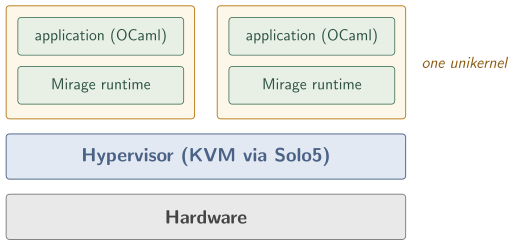
- A unikernel = one statically-compiled ELF binary.
- A few MiB on disk, a few MiB of RAM, boot in milliseconds.
- Side-by-side unikernels, hypervisor-isolated.
The shape of this picture is what an operating system written in OCaml looks like when you take the M01-to-M11 program seriously and push it down to the lowest layer.
The build pipeline
Building a MirageOS unikernel is a multi-stage pipeline. It is worth walking step by step, because the same pipeline is what delivers the "specialisation" property that gives unikernels their small footprint.
The starting point is a small OCaml file called config.ml. This is
not the application; it is a manifest that describes which
libraries the unikernel needs and how they should be wired together.
The manifest uses combinators from the mirage package. The
manifest for an HTTP service might say "a network stack on the
default network device, an HTTP server on top, hand the result to
my application functor" (the next lecture writes exactly that
manifest).
You then run mirage configure -t <target>. The target picks the
backend: unix for a plain Unix process, hvt for Solo5 on KVM,
xen for Solo5 on Xen, and so on. The mirage configure command
reads config.ml, decides which OCaml packages this configuration
needs, and generates the build context:
- A
Makefileand the dune build files, at the project root. - A
mirage/directory holding the generated pieces: amain.mlthat ties the application module to the chosen backend implementations (generated; you do not write it), and an opam file named for the configuration, e.g.hello-hvt.opam, listing the packages this target needs.
The next stage is make depend, which locks and fetches those
packages (MirageOS builds vendor their dependencies into the
project), and then make, which runs dune build. The
dune build is where the OCaml compiler does its real work: it
compiles the application source, the generated main.ml, and every
library, links them all into one image, and runs the OCaml linker's
dead-code elimination pass. The result is a statically-linked binary
in dist/<name>.
Picture the pipeline as boxes connected by arrows. Far left: a green
config.ml. An arrow labelled mirage configure points at a stack
of generated files: Makefile, the opam file, main.ml, and the
backend wiring. The paths converge: make depend fetches the
target's packages, dune build runs the compile-and-link, and the
output is a blue box
labelled image. Off to the side, a green unikernel.ml (the
application code you actually wrote) also feeds into the dune build.
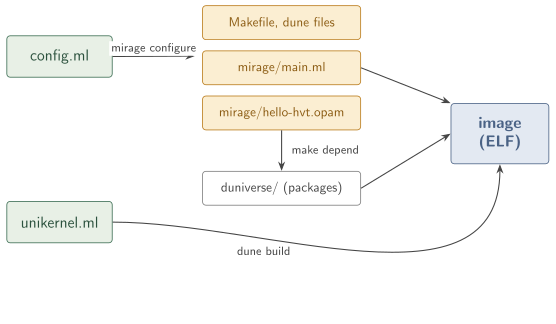
MirageOS multi-stage pipeline
config.mlis a manifest, not the application.- The pipeline generates the wiring; you write
unikernel.ml. make dependfetches the target's packages.dune buildproduces a single statically-linked ELF.
Two things are interesting about this pipeline that we did not see in
ordinary OCaml development. First, the specialisation happens at
build time: the same unikernel.ml can be configured for unix or
hvt or xen, and each configuration gets a different set of
backend libraries linked into the image. The application code does
not change; the wiring underneath does. Second, the OCaml linker
performs whole-program dead-code elimination: any function that
no path through the application reaches is stripped out of the
binary. This is why the resulting image is only a few megabytes
despite linking entire network and storage stacks; only the parts
those stacks actually exercise survive.
What ships with MirageOS
A MirageOS unikernel does not call into any Linux. Every piece of functionality the application needs has to come from an OCaml library inside the binary. The MirageOS ecosystem is large enough that this is feasible for many real applications.
Roughly catalogued, the available libraries are:
- Network. Ethernet, IP (v4 and v6), UDP, TCP, HTTP 1.0 / 1.1 / 2.0, ALPN, DNS, ARP, DHCP, SMTP, IRC, Cap'n Proto, email parsing. Pure-OCaml implementations of each layer, composable through module signatures.
- Storage. Block-device drivers, RAM disks, the QCow virtual- disk format, B-trees, VHD, Zlib, gzip, lzo, git, tar, FAT32.
- Data structures. LRU caches, Rabin's fingerprint, Bloom filters, adaptive radix trees, discrete interval encoding trees.
- Security. X.509 certificate parsing, ASN.1, TLS, SSH.
- Crypto. Hashes and checksums (SHA-1, SHA-2, SHA-3, MD5, Blake2), ciphers (AES, 3DES, RC4, ChaCha20/Poly1305), AEAD primitives (AES-GCM, AES-CCM), public-key (RSA, DSA, DH), the Fortuna PRNG.
Almost all of this is reimplemented in OCaml. The few exceptions
are performance-critical low-level routines (constant-time AES, for
example) which are either written in carefully audited C, or
extracted from formally verified Rocq (formerly Coq) sources
(we'll come to that in a
moment). For an application like a HTTPS web server, every layer
from the Ethernet frame parser up to the HTTP response writer is
OCaml. There is no libssl. There is no libcurl. There is no
glibc.
TLS as rigorous engineering
Of all the libraries on that list, the one that best illustrates the ambition of the MirageOS project is the TLS implementation. TLS is notoriously hard to implement correctly: the specifications are sprawling, the state machine is intricate, the cryptographic primitives are unforgiving, and a single bug can compromise the confidentiality and integrity of every connection. OpenSSL's CVE history is one long, painful demonstration of how much can go wrong.
The MirageOS TLS implementation was published at USENIX Security in 2015 by David Kaloper-Meršinjak, Hannes Mehnert, Anil Madhavapeddy, and Peter Sewell, under the title Not-quite-so-broken TLS: lessons in re-engineering a security protocol specification and implementation. The paper's contributions are technical, but the engineering approach is what is worth describing here.
Three properties of the OCaml-TLS stack stand out (the first and third are from the paper; the second has been strengthened since):
- Same pure code generates test oracles, verifies against real-world TLS traces, and serves as the real implementation. In the conventional setup, the production implementation is one codebase and the testing infrastructure is another; mismatches between the two are how the production code drifts away from the spec. In OCaml-TLS, the state-machine code is purely functional, and the same functions are used to (a) drive the production server, (b) generate test inputs, and (c) validate against recorded traces from other TLS stacks. The lack of side effects in the core makes this consolidation possible.
- A clean-slate crypto stack, now with machine-checked
primitives. The 2015 paper built on
nocrypto, a from-scratch OCaml cryptography library written for this stack. Its successor, mirage-crypto, is what MirageOS ships today, and it raises the bar. The constant-time arithmetic that underpins elliptic-curve operations is notoriously fiddly: subtle side-channel leaks have produced multiple CVEs in mainstream implementations. Fiat-Crypto is a project that proves, in the Rocq proof assistant, that the code implementing these primitives matches a mathematical specification, and then extracts the verified C automatically. mirage-crypto uses these extracted primitives for its elliptic curves. The trust story for that core is no longer "we audited the C very carefully"; it is "we have a machine-checked proof." - Strong types track state-machine validity. TLS has a state machine with dozens of states and constrained transitions. In OCaml-TLS, those states are encoded as variant types, and the compiler refuses to let the implementation enter an invalid state. Whole categories of "state confusion" CVEs (a category that has affected OpenSSL multiple times) cannot occur.
The combined picture is that OCaml-TLS is what you get when you take the engineering principles of this whole course (memory safety, exhaustive pattern matching, pure functions, strong types, verified critical pieces) and apply them to the production implementation of a security protocol. The result is a TLS implementation small enough to audit and structured well enough that audit means something.
OCaml TLS: rigorous engineering
- Same pure OCaml code drives the server, generates test oracles, and validates against real-world TLS traces.
- Clean-slate crypto:
nocryptoin the 2015 paper.- today's
mirage-cryptoextracts its elliptic curves from machine-checked Rocq proofs (Fiat-Crypto).
- today's
- Variant types encode the state machine: invalid transitions are unrepresentable.
- The course's safety toolkit, applied to a security protocol.
Hello Unikernel
Worth seeing the code for one concrete example. The simplest
MirageOS unikernel is something that, every second, logs the word
"hello" and exits after a few iterations. The actual unikernel.ml
looks like this, and the open Lwt.Syntax at the top should ring
a loud bell: it brings let* into scope, the binding operator you
defined for the option monad and
the state monad. Lwt is a third
instance of the same pattern: a concurrency monad. An
'a Lwt.t is a computation that will eventually deliver an 'a,
Lwt.return wraps a value, and let* () = e in ... reads "wait
for e to finish, then continue."
open Lwt.Syntax

let start () =
  let rec loop = function
    | 0 -> Lwt.return_unit
    | n ->
        Logs.info (fun f -> f "hello");
        let* () = Mirage_sleep.ns (Duration.of_sec 1) in
        loop (n - 1)
  in
  loop 4
(That is the current mirage-skeleton hello, for mirage 4.9 and
later.) A few things worth noticing, even without running it:
Mirage_sleep.nsis a platform service. The application calls one name; which implementation answers (the Unix one, the Solo5 one) is decided by which backend packagesmirage configure -t <target>selects, and resolved when the image is linked. For simple ambient services like time, clocks, and randomness, MirageOS wires the backend in at link time; nothing in the application changes between targets.- The body uses
Lwt, the cooperative-concurrency library, andLogs, the structured logging library. Both are normal OCaml packages; in a Linux process they would do the same thing they do here. (In the wild you will also see Lwt's bind written as the infix>>=fromLwt.Infix, the same shape as the QCheck-generator>>=in property-based testing;let*is the binding form of the same operator.) - The entry point is a
startfunction. The build pipeline (via the generatedmain.ml) calls it. - There is no
main. There is noprintfto stdout. There is no Unix shell waiting for the binary's exit status. The image is the program, andstartis the only entry point.
Hello is too small to show the functor side of MirageOS: it
consumes no real device. The moment an application takes a device
worth abstracting (an HTTP server, a key-value store, a network
stack), it is written as a functor over that device's signature,
and mirage configure picks the implementation. The next lecture's
HTTP unikernel is exactly that shape, and the section after this
one shows the functor graphs of a full website doing it at scale.
Configured for the Unix backend (mirage configure -t unix),
the build produces a dist/hello executable. Running it on a Linux
host gives output like:
2024-11-25T17:04:16+05:30: [INFO] [application] hello
2024-11-25T17:04:17+05:30: [INFO] [application] hello
2024-11-25T17:04:18+05:30: [INFO] [application] hello
2024-11-25T17:04:19+05:30: [INFO] [application] hello
That is the unikernel running as a plain Linux process. Convenient for development; useful for debugging; not the production target.
Configured for the hvt backend (mirage configure -t hvt),
the build produces dist/hello.hvt, which is a Solo5 image. You
run it with solo5-hvt -- dist/hello.hvt, and the output is:
            |      ___|
  __|   _ \  |  _ \ __ \
\__ \  (    | (    |   |
____/ \___/ _|\___/____/
Solo5: Bindings version v0.9.0
Solo5: Memory map: 512 MB addressable:
Solo5:   reserved @ (0x0 - 0xfffff)
Solo5:       text @ (0x100000 - 0x1c4fff)
Solo5:     rodata @ (0x1c5000 - 0x1f5fff)
Solo5:       data @ (0x1f6000 - 0x289fff)
Solo5:       heap >= 0x28a000 < stack < 0x20000000
2024-11-25T11:47:10-00:00: [INFO] [application] hello
2024-11-25T11:47:11-00:00: [INFO] [application] hello
2024-11-25T11:47:12-00:00: [INFO] [application] hello
2024-11-25T11:47:13-00:00: [INFO] [application] hello
Solo5: solo5_exit(0) called
Same unikernel.ml. Same config.ml source. Different mirage configure invocation. The first runs as a Linux process; the second
runs as a VM on KVM, with no Linux guest inside it.
You do not have to take the pipeline on faith: the course's
in-browser VM now carries the mirage tool and this exact hello
project, pre-configured for -t unix with its dependencies
already vendored (the VM has no network, so the make depend
step was done when the image was built; everything after it is
yours). The loop a MirageOS developer lives in fits in the
terminal below: open unikernel.ml in nano, change what it
logs, make build to relink the unikernel (about 40 seconds in
the emulated machine), and run it. You are rebuilding and booting
an operating system image, in a browser tab.
To do the same on your own machine: the skeleton (a
dune-project, config.ml, and unikernel.ml) is bundled as
/assets/m12/hello-mirage.tar.gz. Untar, opam install mirage,
then mirage configure -t unix, make depend, make, and
./dist/hello. (To run the Solo5 backends you need KVM on Linux,
or one of the Solo5 alternatives; the -t unix loop works
anywhere opam does.)
The module system is the OS
Hello is a toy, so it is worth seeing what the wiring
mechanism looks like at full scale. The mirage tool can draw the
graph of modules it assembles, and for a real unikernel that graph
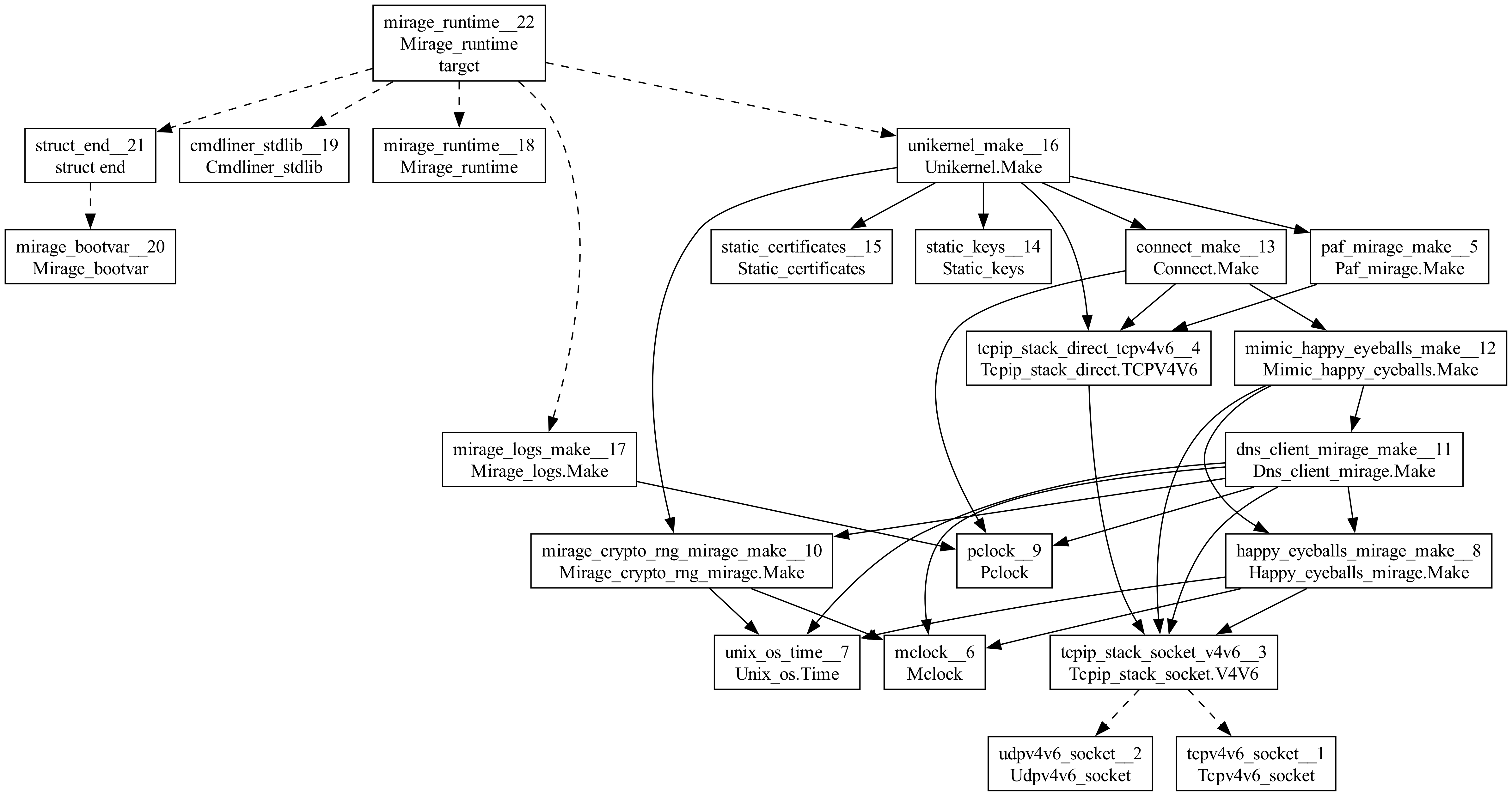
is the operating system's architecture diagram. Every box below
is an OCaml module; every arrow is a functor application; the
whole picture is computed by mirage configure from the manifest.
This is the course's module-system material (signatures, functors,
sealing) doing literal OS construction.
Take the mirage.io website, a full HTTPS server. Configured with
mirage configure -t unix --net=host, the network is provided by
the host's sockets, and the assembled graph is already a real
system: the unikernel functor applied to certificate stores, key
stores, a DNS client, happy-eyeballs connection logic, clocks, and
a socket-backed TCP/IP stack:
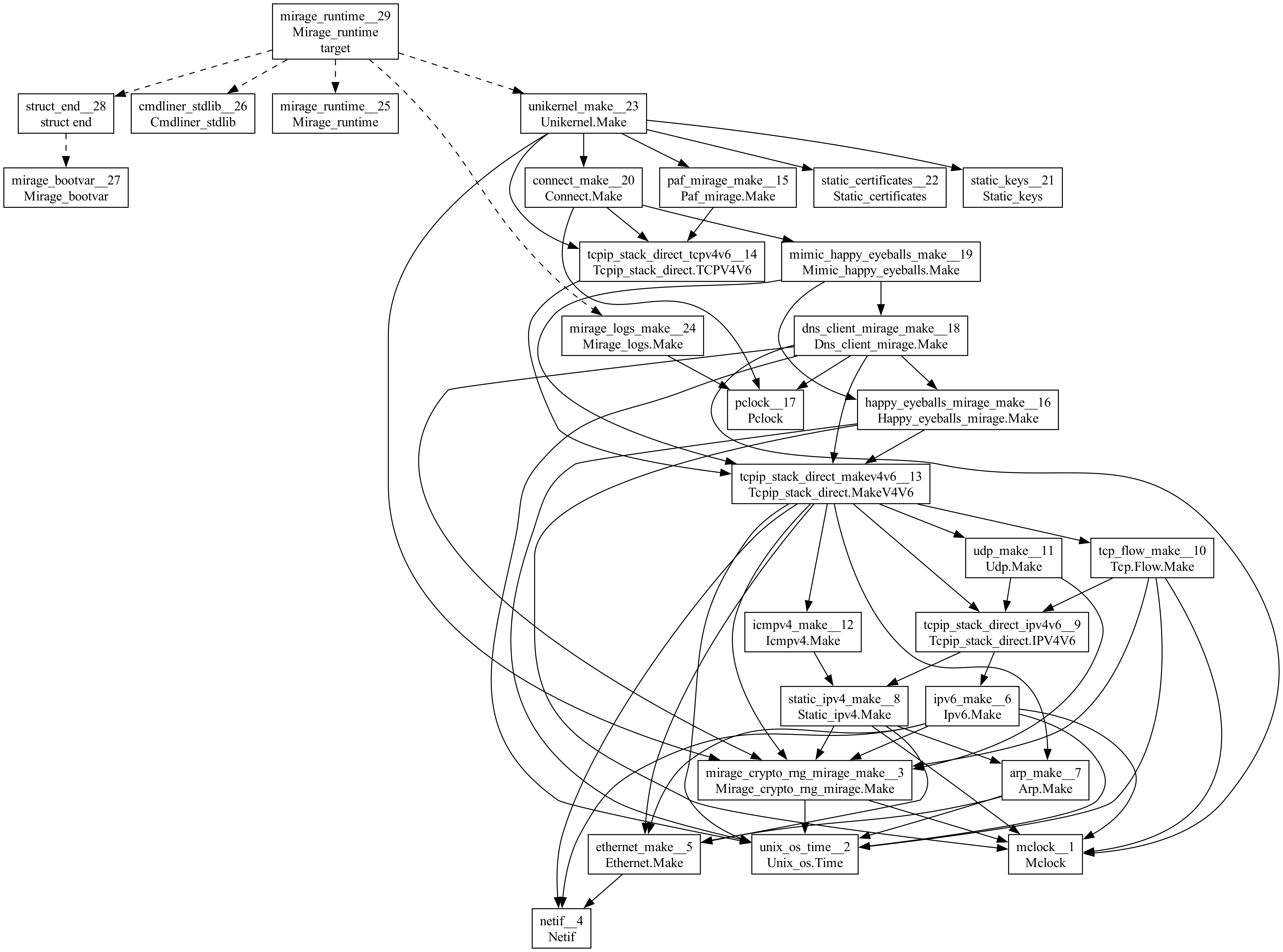
Now change one flag: --net=direct. The same unikernel.ml,
re-wired against MirageOS's own network stack instead of the
host's sockets. The graph grows by exactly the OS code that just
entered the image: Ethernet, ARP, IPv4, IPv6, ICMP, UDP, TCP, all
as functor applications:
Zooming into the lower half of that graph shows the TCP/IP stack being assembled module by module, down to the network interface:
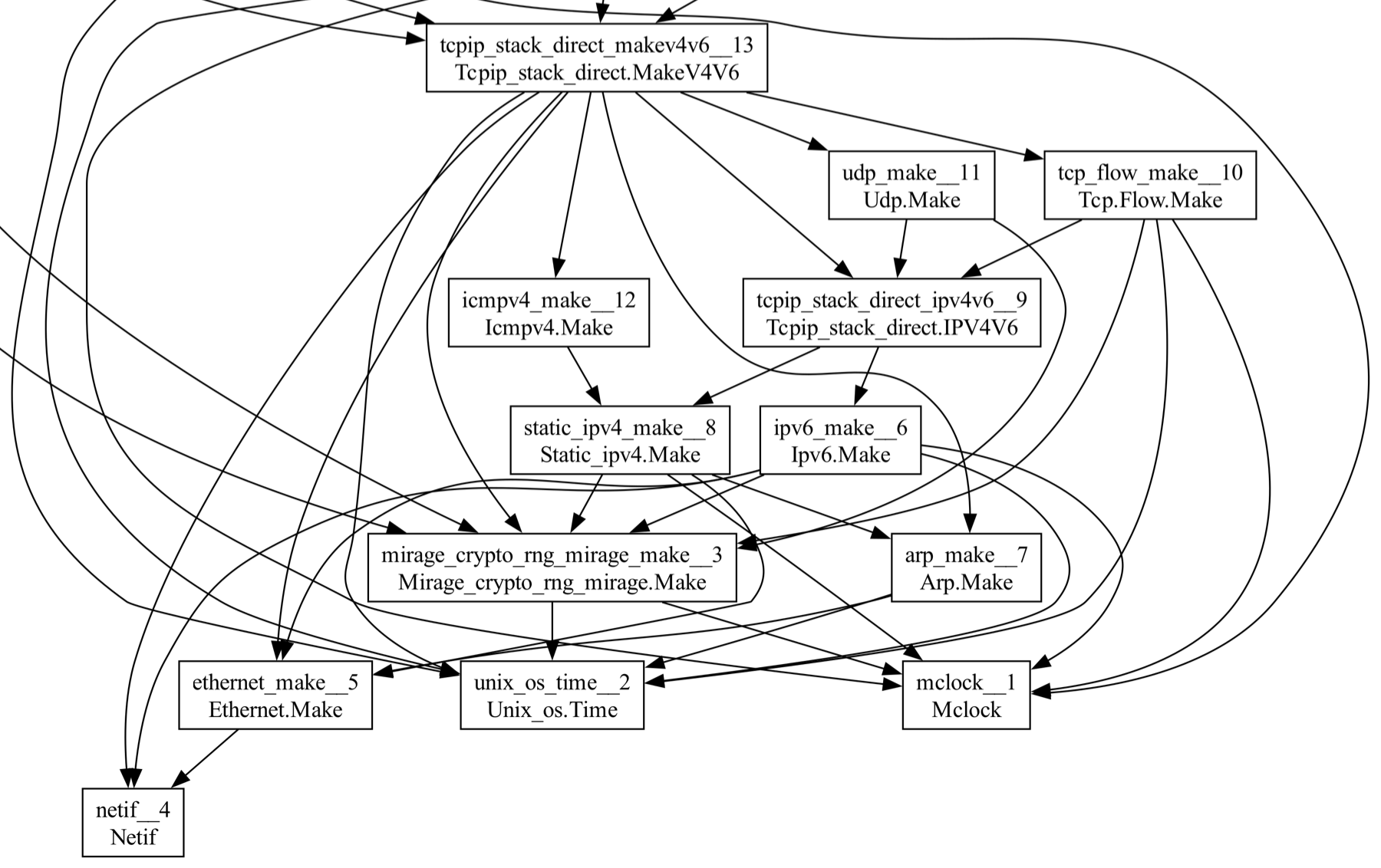
Pause on what this means. In the modules material you sealed a
two-list queue behind a signature and parameterised code with a
functor. Here the entire operating system is built the same way:
Tcpip_stack_direct.MakeV4V6 is a functor over an Ethernet
module, which is a functor over a network interface, and so on
down to the device. Swapping the host's sockets for a from-scratch
TCP/IP stack is not a port; it is a different functor application,
chosen by one flag in the manifest. That is the precise sense in
which MirageOS is "what you can do with the language": the module
system you learned for code organisation turns out to be an OS
construction kit.
(One dating note: these graphs were generated with mirage 4.8. Since mirage 4.9 the small ambient services, the clock and time nodes in the corners, are wired at link time instead and drop out of the picture; the network-stack functors, the substance of the graphs, are unchanged.)
The module system is the OS
- The mirage.io HTTPS server,
-t unix --net=host. - Every box is a module; every arrow a functor application.
mirage configurecomputes this graph from the manifest.
One flag later: the OS enters the image
- Same
unikernel.ml, configured--net=direct. - The growth is exactly the OS: Ethernet, ARP, IPv4/v6, ICMP, UDP, TCP.
Zoom: the TCP/IP stack as functor applications
Tcpip_stack_direct.MakeV4V6over UDP, TCP, ICMP, IP, ARP, Ethernet, Netif.- The sealed-module discipline from the FP half, building an OS.
Retargeting in miniature
The graphs make the claim; the mechanism is small enough to hold
in two cells. Strip everything else away and the trick under
mirage configure -t is a single functor application. First the
ingredients: a signature for a platform service, two
implementations standing in for the host kernel's clock and the
hypervisor's clock, and an application functor that cannot tell
which one it will be given.
The body of App is written once and never names an operating
system; the signature is all it can see. Now apply it twice:
These two module bindings are the unikernel build in miniature:
mirage configure -t unix makes the first choice when it
generates the real main.ml, -t hvt makes the second, and the
same application functor is reapplied. When you sealed the
two-list queue behind a signature, this was the skill you were
building; mirage applies it with an operating system on the far
side of the signature. Swap the implementation, rerun the cell,
and you have retargeted a (toy) system without touching its
application code.
MirageOS in 2026
MirageOS is an active project, and the 2025-2026 releases moved it forward on three fronts worth knowing about.
OCaml 5. MirageOS runs on OCaml 5 (the ocaml-solo5 1.0 release, February 2025, moved the Solo5 backends to OCaml 5.2). Solo5 itself remains single-core, so unikernels get OCaml 5's effects machinery but not parallelism yet.
New targets: Unikraft, QEMU, and Firecracker. Since mirage
4.10 (September 2025), the tool has unikraft-qemu and
unikraft-firecracker targets, built on an OCaml cross-compiler
to Unikraft, a CNCF library-OS project (announced by Tarides,
November 2025). This brings MirageOS to two new VMMs (plain QEMU
and AWS's Firecracker), to arm64 as well as x86_64, and, as
Unikraft's multicore support matures, opens a path to true
multicore OCaml unikernels. The backend is young, but it is the
direction of travel.
A swappable TCP stack. mirage 4.11 (May 2026) added --utcp,
which swaps the classic mirage-tcpip stack for uTCP, Robur's
from-scratch TCP implementation informed by a formal TCP
specification. One flag in the manifest, exactly like --net
above: the module graph re-wires, the application code does not
change.
Who runs unikernels in production
MirageOS is not vapourware, and the clearest evidence in 2026 is Robur, a worker-owned cooperative that runs its infrastructure on MirageOS and ships production unikernels:
- dnsvizor: a DNS resolver and DHCP server in one unikernel, a drop-in replacement for dnsmasq and Pi-hole, with DNSSEC, DNS-over-TLS/HTTPS, ad-blocklists, and a web UI (all landed in 2025, EU NGI-funded).
- miragevpn: an OpenVPN-compatible VPN client and server, including a QubesOS client.
- albatross and mollymawk: the operations layer; a daemon that deploys and monitors fleets of unikernels, and its web UI. Unikernels grew an ops story: consoles, metrics, DHCP auto-configuration, multi-server fleets.
- ptt: an email stack; since 2026 a real public mailing list runs on it in production.
- builds.robur.coop: reproducible binary builds of all of the above, plus opam-mirror, a unikernel that mirrors the opam package archive.
Beyond Robur: qubes-mirage-firewall is the standard-bearer deployment (the firewall VM many QubesOS users run, maintained since 2015); mirage.io serves its own website. (Tezos, the OCaml blockchain, funded experiments in packaging its nodes as MirageOS unikernels; that work stayed experimental.) And the container world is meeting unikernels halfway: urunc (from the background lecture) launches solo5 unikernels under Kubernetes.
The niche is clear: long-running network services where the operational benefits (small attack surface, fast restart, reproducible builds, predictable resource use) pay for the narrower library ecosystem.
Three stories
Three short stories make the safety-and-footprint argument concrete; each was a real deployment.
The Bitcoin Pinata. In 2015 the OCaml-TLS authors put their money where their stack was: an 8.2 MB MirageOS unikernel holding the private key to 10 bitcoins (peak value around ₹1.3 crore then; over ₹6 crore at today's prices). Anyone who could break the TLS stack, the unikernel, or the hypervisor isolation could take the coins; the attack surface and the bounty were both public. It ran from 2015 to 2018: over half a million visits, more than 150,000 connection attempts at the bounty. The bitcoins were never taken. As a security argument this is stronger than any benchmark: a standing, funded, public bounty against precisely the stack this lecture describes.
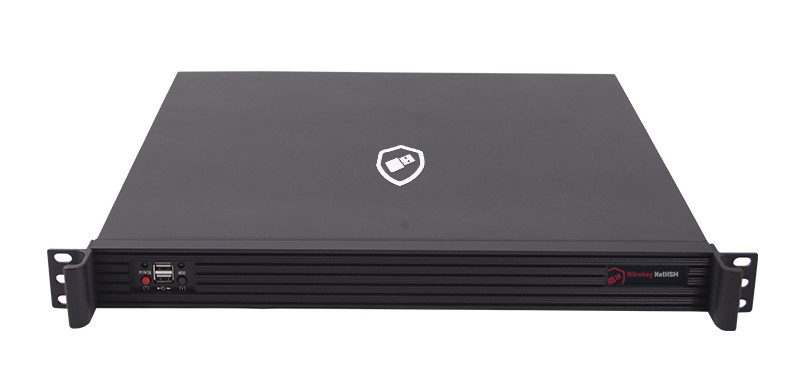
Nitrokey NetHSM. A commercial hardware security module (the appliance that guards an organisation's cryptographic keys) whose entire software stack is a MirageOS unikernel running on the Muen separation kernel, the high-assurance Solo5 backend from the background lecture. Open source, auditable end to end, and sold as a product: unikernels passing a commercial-credibility test.
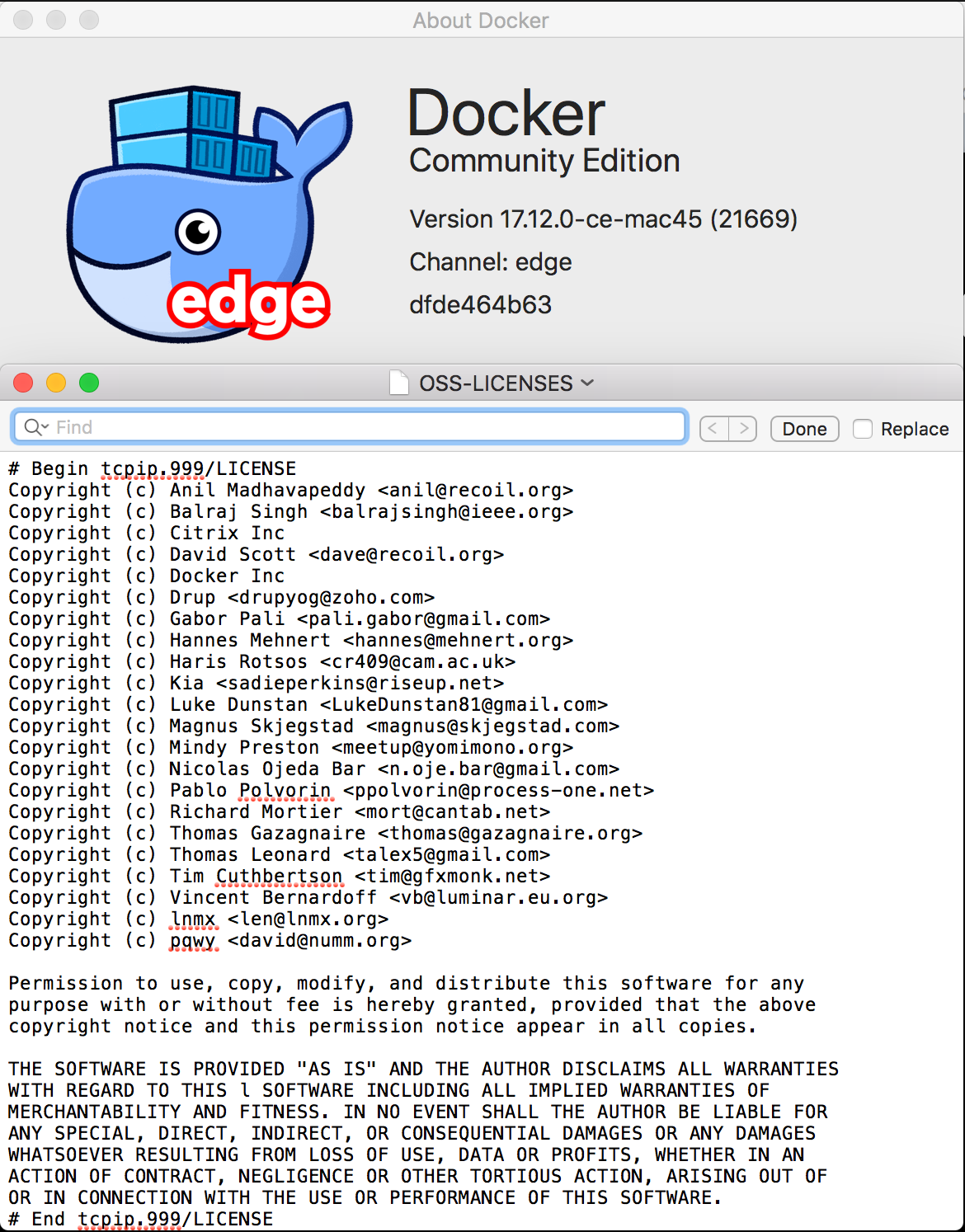
Docker for Mac. The widest deployment of MirageOS code is one most users never saw: for years, Docker Desktop's VM-to-host networking layer was VPNKit, the component that translates between the Linux VM's Ethernet packets and macOS's network calls, built from MirageOS networking libraries. The functor-assembled network stack from the graphs above shipped on millions of developer laptops. (Docker Desktop swapped in a gVisor-based stack in 2023; VPNKit is still maintained and used elsewhere.)
The Bitcoin Pinata: a funded, public bounty
- An 8.2 MB unikernel holding the key to 10 bitcoins (peak value about ₹1.3 crore then; over ₹6 crore today).
- Break the TLS stack, the unikernel, or the isolation: keep the coins.
- Ran 2015 to 2018: 500k visits, 150k+ bounty attempts.
- The bitcoins were safe.
NetHSM and Docker for Mac
- A commercial HSM: MirageOS on the Muen separation kernel.
- Open source, auditable end to end.
- Docker Desktop's VPNKit: MirageOS networking code.
- shipped on millions of laptops; replaced by a gVisor stack in 2023.
Advanced topic: hardware-assisted unikernels
A unikernel is not pure OCaml. The image links the OCaml runtime, which is C, plus any C stubs the application reaches through the foreign-function interface. As the memory-safety module argued, OCaml's guarantees stop exactly at that boundary: a bug in the C is unconstrained, and inside a unikernel there is a single address space with no kernel underneath to contain it, so corrupt C can scribble over the OCaml heap and everything else. Pushing the OS into a safe language shrinks the unsafe surface down to the runtime and the stubs; it does not erase it.
There is an active research direction in hardware-assisted unikernels that uses CPU features to contain that residual C. Memory-safety hardware (CHERI capabilities, and Shakti FIDES on the Indian Shakti RISC-V processor) compartmentalises the C so that a bug in it cannot reach the OCaml heap or escape its compartment. Suresh the Stationmaster, written in OCaml over a runtime whose C is fenced in by the hardware, is the picture FIDES draws: it runs bare-metal MirageOS unikernels with OCaml and C side by side, each in its own hardware-enforced compartment.
The hypervisor is a second piece of the trusted base. KVM is hundreds of thousands of lines of C, also in the TCB of every unikernel on the host. A separate line of CPU features (Intel TDX, AMD SEV-SNP, ARM CCA) reduces or eliminates the trust placed in the hypervisor: the vision there is a unikernel whose memory the hypervisor cannot read and whose execution it cannot tamper with.
KC Sivaramakrishnan's November 2024 talk Securing the foundations at the Centre for Artificial Intelligence and Robotics (CAIR / DRDO) covers the threat model and the hardware, and the FIDES paper (FIDES: End-to-end Compartments for Mixed-language Systems, AsiaCCS 2026) is the detailed treatment of the mixed-OCaml-and-C case. We do not cover this material in the course; these are the right starting points for the curious.
The course, end to end
We are one lecture from the end of the course, and the safety
story has come a long way since let x = 1.
In M01 we argued that values and types are the unit of reasoning in OCaml. In M02 to M08 we built the core language: literals, bindings, functions, pattern matching, modules. By the end of M08 you had a complete functional language and the discipline to use it well.
In Module 9 we said that types catch type errors but not behaviour, and added testing; especially property- based testing, which works particularly well because pure functions are properties.
In Module 10 we made the memory-safety claim precise. Use-after-free, buffer overflow, uninitialised reads, double-frees: all ruled out by construction. The numbers (70 percent of CVEs are memory-safety bugs) made the argument concrete.
In Module 11 we pushed safety into new territory with OxCaml's modes: locality made stack allocation safe; uniqueness ruled out use-after-free at the type level; linearity made a second use of a consumed handle unwritable; and portability with contention delivered compile-time data-race freedom. Types tracking how a value is used, not just what it is.
In Module 12 we have taken the whole apparatus and pushed it down into the operating system itself. MirageOS is what the safety toolkit looks like when you apply it to the runtime your application sits on. Library OS removes the kernel boundary; virtualisation gives back the inter-application isolation; OCaml gives back the intra-application safety. The result is a small, fast, auditable platform.
That is the course, end to end. Twelve modules of lectures, runnable cells, and quizzes: all of it adds up to one idea, that safety is something you can build into your software at every level if you take the language seriously.
Activity
A MirageOS unikernel is built by running mirage configure -t hvt,
then make. What is the output of this build, and what runs it?
- A Linux kernel module loaded into the host's running kernel.
- A statically-compiled ELF binary that runs as a VM under Solo5 on KVM.
- A Docker container that runs on the host kernel.
- A bytecode file interpreted by the OCaml toplevel.
Why: -t hvt targets the Solo5 hardware-virtualisation tender
on KVM. The build produces an ELF image (dist/<name>.hvt); you
run it with solo5-hvt -- dist/<name>.hvt, which starts a KVM VM
whose only contents are this unikernel. There is no Linux guest
inside the VM; the unikernel is the OS. Containers share the host
kernel and would not give us the isolation guarantees the
background lecture established; bytecode plays no role in the
pipeline, since even the development backend
(mirage configure -t unix) is a native-compiled Unix executable.
Why is the OCaml-TLS implementation considered "rigorous engineering" in a way that conventional TLS libraries typically are not?
- It runs ten times faster than OpenSSL.
- It implements only modern cipher suites and rejects every legacy TLS record format.
- Types encode the TLS state machine; tests reuse the implementation.
- It is written by a different vendor from OpenSSL.
Why: those two engineering moves are what the USENIX
Security 2015 paper documents (its crypto provider was nocrypto,
a clean-slate OCaml library); the Rocq-extracted primitives came
later, in the successor mirage-crypto stack. The result is a stack
whose correctness story is fundamentally different from "we wrote
it carefully": it is "we built the abstractions so the bugs cannot
occur." Speed and size are secondary; the safety argument is the
news.
Show reference solution
Q1: mirage configure -t hvt && make produces a statically-linked
ELF that runs as a KVM VM via Solo5.
Q2: OCaml-TLS's rigorous engineering: the same pure code drives production, test-oracle generation, and trace validation; variant types encode the state machine so invalid transitions are unrepresentable; and today's mirage-crypto extracts its elliptic-curve primitives from machine-checked Rocq proofs.
Common pitfalls
Pitfall 1: "Unikernels replace Linux." Not for general-purpose computing. They replace Linux in deployment niches: long-running network services, security-sensitive infrastructure, cloud workloads where the per-instance footprint matters. Your developer workstation is still going to run a conventional OS.
Pitfall 2: "You have to write the whole OS yourself." The
library catalogue we walked through covers most of what a typical
service needs. You write the application; the libraries supply the
rest. The MirageOS skeletons (mirage-skeleton on GitHub) are
good starting points.
Pitfall 3: "If it crashes, what happens?" The unikernel exits.
That is it. There is no kernel panic, no rescue shell, no
systemd restart logic inside the image. The host's
deployment system (systemd, kubernetes, nomad, whatever you
use) restarts the unikernel from scratch. The boot time is small
enough that this is operationally acceptable for most services.
Pitfall 4: "There's no way to log in." Right; there is no shell.
For observability, the unikernel logs via the Logs library to
stdout (in the Unix backend) or via Solo5's console output (in the
hvt backend). Production deployments capture those logs the same
way they capture any container's stdout.
What's next
The final lecture is the hands-on companion to this one: Suresh
the Stationmaster, one small HTTP unikernel walked end to end. You
will see the two files you actually write (unikernel.ml and
config.ml), the artefacts mirage configure generates, the
dune build that links the static ELF, the solo5-hvt boot, a
curl against the running VM, and the footprint numbers that
fall out.
Reading
- MirageOS project home: https://mirage.io/
- mirage-skeleton, the canonical starter projects: https://github.com/mirage/mirage-skeleton
- Solo5: https://github.com/Solo5/solo5
- Kaloper-Meršinjak, Mehnert, Madhavapeddy, Sewell, Not-quite- so-broken TLS: lessons in re-engineering a security protocol specification and implementation, USENIX Security 2015: https://www.usenix.org/system/files/conference/usenixsecurity15/sec15-paper-kaloper-mersinjak.pdf
- Robur, a non-profit deploying MirageOS in production: https://robur.coop/
- Fiat-Crypto (Rocq-extracted cryptographic primitives, used by mirage-crypto for its elliptic curves): https://github.com/mit-plv/fiat-crypto
- KC Sivaramakrishnan, Securing the foundations (CAIR / DRDO, Nov 2024), for the hardware-assisted-unikernels pointer.
- Sai Venkata Krishnan, Arjun Menon, Chester Rebeiro, KC Sivaramakrishnan, FIDES: End-to-end Compartments for Mixed-language Systems, AsiaCCS 2026: https://kcsrk.info/papers/fides_asiaccs_2026.pdf
Sources
This lecture's prose, worked examples, and quizzes are original to
this course. The MirageOS narrative (synthesis, multi-stage pipeline
diagram, available-libraries catalogue, hello-unikernel example,
TLS-as-rigorous-engineering framing) follows KC Sivaramakrishnan's
January 2025 IIT Madras talk Towards smaller, safer, bespoke OSes
with Unikernels, slides 27 to 35. The pointer to hardware-assisted
unikernels follows KC's CAIR / DRDO November 2024 talk Securing the
foundations and the FIDES paper (Krishnan, Menon, Rebeiro,
Sivaramakrishnan, FIDES: End-to-end Compartments for Mixed-language
Systems, AsiaCCS 2026), whose intra-process compartmentalisation on
the Shakti RISC-V processor is the source for the in-unikernel
C-memory-safety framing. The TLS paper (Kaloper-Meršinjak et al., USENIX
Security 2015) is the standard academic anchor for the OCaml-TLS
story, and its title block is reproduced as a citation, as are the
Bitcoin Pinata, NetHSM, and Docker for Mac images that identify
those deployments. The 2026 ecosystem facts (mirage 4.10/4.11,
ocaml-solo5 1.0, the Unikraft targets, Robur's fleet) are from the
projects' own release notes and announcements. See
LICENSES.md
at the repository root for the full source posture.